
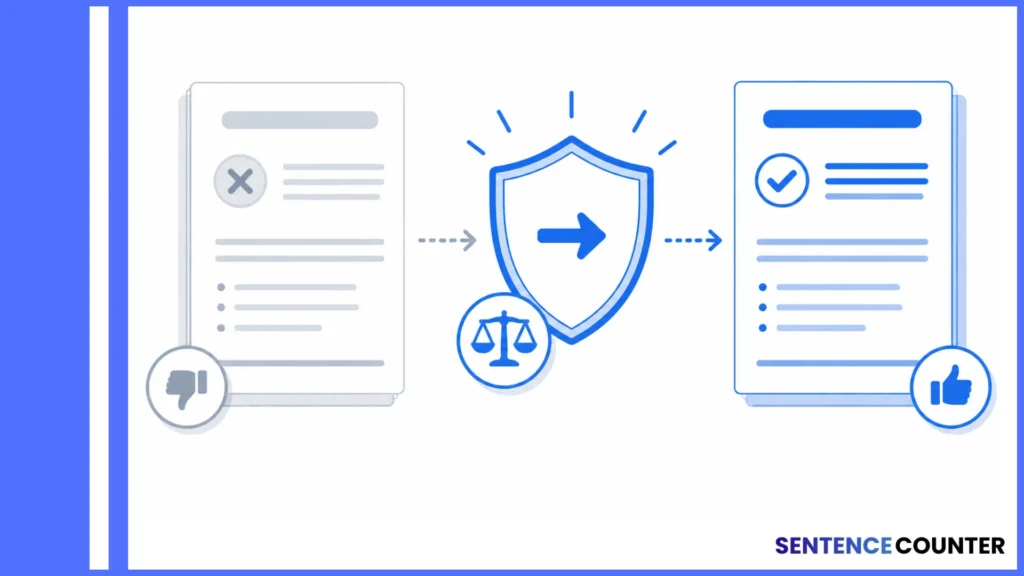
What is a rebuttal in an argumentative essay? A rebuttal is one of the strongest parts of an argumentative essay. This is the part that demonstrates a writer’s critical thinking and deep understanding of the given topic. A rebuttal not only includes different dimensions of the topic, but also explains why your perspective is correct.
Furthermore, writing a rebuttal establishes your credibility. This article will explain what a rebuttal is, why it is important, how to write it effectively with an example and what makes a strong rebuttal.
What Is a Rebuttal in an Argumentative Essay?
Rebuttals in argumentative essays are the sections that respond to the counterarguments to your main argument. It introduces one or more opposing views to your argument and then refutes them using logic, evidence and facts. The purpose of writing a rebuttal is to identify flaws in the counterarguments and explain why your argument or viewpoint is the strongest.
Rather than disagreeing with the counterpoints straight away, a rebuttal section critically refutes the opposing viewpoints. Furthermore, including a rebuttal strengthens your essay as it shows that you have considered multiple perspectives before arriving at a specific conclusion.
Argumentative Essay Structure:
Like every other essay, argumentative essays have a clear structure to follow. A typical argumentative essay has the following structure:
- Introduction: Provides relevant background information about your topic and contains the thesis statement (main argument).
- Body Paragraphs: Each paragraph focuses on a specific point (topic sentence of the paragraph), which you then support with relevant evidence and reasoning.
- Counterargument: Present one or more counterarguments to your main argument.
- Rebuttal: Explains why your argument is better in comparison to opposing arguments.
- Conclusion: Summarize the main points of your essay, freshly restate your thesis, and leave readers with a final thought or call to action, depending on the topic.
Why Rebuttals Are Important
As explained above, rebuttals are the most important part of an argumentative essay. It addresses any objections to the main points of your essay, while strengthening your argument.
A rebuttal section identifies the flaw in the counterarguments to your argument and helps readers understand why your perspective is correct. Here are some other reasons why rebuttals are important for argumentative essays.
1. Demonstrates Subject Expertise:
A well-written rebuttal section shows how deeply you understand the topic. By refuting the strongest opposing arguments logically and factually, readers will realize that you have considered multiple sides of the issue before concluding.
2. Addressing Opposing Arguments:
An argumentative essay is incomplete without addressing opposing arguments. You can’t just pick a side and try to prove it right in the entire essay. Every argument has some flaws, so do yours.
Readers will easily criticize your essay for being biased. By addressing counterarguments properly, your essay will look unbiased and neutral to your readers, making it easier for them to trust your opinion.
3. Enhances Critical Thinking:
A well-structured rebuttal enhances your critical thinking and argumentative skills. When you are forced to confront opposing views, you will try to reason why your perspective is the correct one. Therefore, a rebuttal section is important not only for your essay, but to develop strong critical analysis skills.
4. Strengthen Your Argument:
A rebuttal strengthens your position on a particular issue while dismissing the counterarguments. By properly exposing all the flaws and fallacies in the opposing arguments, readers are more likely to accept your argument.
How to Write an Effective Rebuttal?
The goal of a rebuttal is to use reasoning and evidence to refute the counterpoints to your main argument. Rather than rejecting the other perspectives out of emotion or flawed logic, you take your time and actually research if there is some degree of merit in the counterarguments. Additionally, here are some strategies for writing an effective rebuttal.
1. Introduce the Opposing Viewpoint:
The first and foremost goal of a rebuttal is to introduce the counterargument. You need to explain:
- The entire counterargument properly
- Why it makes sense
- If there is any validity in opposing viewpoints
2. Slightly Agree With the Counterargument:
To refute the counterarguments effectively, you need to slightly agree with it or at least consider it to be true in a particular case. Then, explain why the argument breaks down in specific conditions.
Example:
Many people argue that gaming affects children’s studies. While it is true that many children play games all day long and don’t study properly, gaming helps some students freshen up their minds for a tough academic battle.
3. Explain Your Perspective Logically:
After briefly agreeing with a counterpoint, explain your stance properly. First, introduce your counter to an opposing viewpoint. Then, support it using logic and evidence.
4. Refute the Counterpoints Using Evidence and Reasoning:
After introducing your argument to a counterargument, use all the relevant evidence, facts and reasoning you can to support it. Once you identify a weakness in a counterpoint, it becomes easier to support your perspective with strong evidence and logic.
5. Acknowledge Weaknesses in Your Own Argument:
A strong rebuttal shouldn’t only focus on refutation of the counterarguments. It must also acknowledge weaknesses in your perspective, if there are any. This shows fairness in your essay and the ability to acknowledge your weaknesses. Acknowledging your weaknesses is far more likely to persuade your readers than in the latter case.
6. Link Back to Your Thesis:
After responding to a counterargument, connect your rebuttal to your thesis statement. This step reminds readers how your response supports your main claim and keeps your essay focused on its central argument.
Note:
As you revise your essay, check that every rebuttal ends by reinforcing your thesis. You can also use our Sentence Counter tool to instantly check the length and clarity of your rebuttal paragraphs while revising your argumentative essay.
What Makes a Strong Rebuttal?
A strong rebuttal shouldn’t focus on disagreement with a counterpoint. It should explain to the readers why a particular opposing argument is less convincing using facts, logic and evidence, rather than relying on emotional language. Here’s how you can write a strong rebuttal.
1. Use the Strongest Opposing Viewpoint:
Use the strongest counterargument in your rebuttal to make it more effective and strong. Addressing the strongest criticisms of your argument shows that you have done your homework and that your argument is the most effective one.
2. Cite Credible Sources and Evidence:
The second most important step is to cite credible sources in your rebuttal. Instead of relying on false assumptions or rumours, use:
- Books
- News articles
- Expert Opinions
- Established and undisputed facts
- Real-world examples
to refute the counterargument.
3. Stay Respectful and Logical:
When addressing counter opinions, people often use emotional language in their essays instead of staying logical. This hurts the credibility of their argument and shows the readers that they have incomplete knowledge of the issue.
A strong rebuttal focuses on evaluating the argument itself, not the person presenting it. Use a professional tone and explain your reasoning clearly so readers can follow your thought process.
Example of Rebuttal Paragraph
A strong rebuttal can only be written when you have clear examples demonstrating the writing process. The example below will show you how to write a rebuttal for your own essay.
Topic: Are school uniforms mandatory?
Some people argue that school uniforms limit students’ freedom of expression because clothing allows them to showcase their personalities and individual styles. While it is true that clothing can be a form of self-expression, school uniforms offer benefits that outweigh this concern. Uniforms help reduce peer pressure related to fashion, promote a sense of equality among students, and create a more focused learning environment.
Students can still express their individuality through their interests, achievements, and extracurricular activities rather than their clothing choices. For these reasons, the advantages of school uniforms support the argument that they contribute to a more positive and inclusive school environment.
Conclusion
What is a rebuttal in an argumentative essay? It is a crucial part of your essay that demonstrates your understanding of the topic by addressing all the counterarguments and refuting them logically and factually. Furthermore, it shows that you have considered multiple sides of an issue before arriving at a specific conclusion.
A well-written rebuttal not only strengthens your argument, but also makes it more persuasive. Additionally, rebuttal sections make your essay look unbiased and neutral to your readers, making it more likely for them to trust your opinion. How do you approach writing rebuttals in your essays? Share your thoughts or questions in the comments below!
